We use cookies to understand how you use our site and to improve your experience.
This includes personalizing content and advertising.
By pressing "Accept All" or closing out of this banner, you consent to the use of all cookies and similar technologies and the sharing of information they collect with third parties.
You can reject marketing cookies by pressing "Deny Optional," but we still use essential, performance, and functional cookies.
In addition, whether you "Accept All," Deny Optional," click the X or otherwise continue to use the site, you accept our Privacy Policy and Terms of Service, revised from time to time.
You are being directed to ZacksTrade, a division of LBMZ Securities and licensed broker-dealer. ZacksTrade and Zacks.com are separate companies. The web link between the two companies is not a solicitation or offer to invest in a particular security or type of security. ZacksTrade does not endorse or adopt any particular investment strategy, any analyst opinion/rating/report or any approach to evaluating individual securities.
If you wish to go to ZacksTrade, click OK. If you do not, click Cancel.
Growth stocks have powered a significant share of market gains in recent years.
Growth stocks can carry high valuations and suffer more short-term volatility due to market expectations.
Top rated Growth Stocks include several mining companies and high-tech, AI-driven companies.
Growth stocks have powered a significant share of market gains in recent years, driven by innovation, digital transformation, and expanding global demand. These companies typically reinvest profits to scale operations, launch new products, and capture market share, emphasizing long-term expansion over immediate dividend payouts. From industry-defining technology firms to breakthrough healthcare and consumer brands, growth companies play a pivotal role in many investors’ portfolios.
That potential, however, comes with trade-offs. Growth stocks often carry higher valuations and can be more sensitive to interest rates, earnings expectations, and shifts in market sentiment. Price swings can be sharp, especially when companies fall short of lofty forecasts.
Should you buy a growth stock?
For investors focused on long-term capital appreciation and comfortable with short-term price swings, growth stocks can be powerful long-term wealth builders. Success depends on understanding how these businesses create value, recognizing when growth investing tends to outperform, and knowing how to evaluate opportunities while managing risk within a diversified portfolio.
This is our short term rating system that serves as a timeliness indicator for stocks over the next 1 to 3 months. How good is it? See rankings and related performance below.
The Zacks Industry Rank assigns a rating to each of the 265 X (Expanded) Industries based on their average Zacks Rank.
An industry with a larger percentage of Zacks Rank #1's and #2's will have a better average Zacks Rank than one with a larger percentage of Zacks Rank #4's and #5's.
The industry with the best average Zacks Rank would be considered the top industry (1 out of 265), which would place it in the top 1% of Zacks Ranked Industries. The industry with the worst average Zacks Rank (265 out of 265) would place in the bottom 1%.
The Zacks Sector Rank assigns a rating to each of the 16 Sectors based on their average Zacks Rank.
A sector with a larger percentage of Zacks Rank #1's and #2's will have a better average Zacks Rank than one with a larger percentage of Zacks Rank #4's and #5's.
The sector with the best average Zacks Rank would be considered the top sector (1 out of 16), which would place it in the top 1% of Zacks Ranked Sectors. The sector with the worst average Zacks Rank (16 out of 16) would place in the bottom 1%.
The Style Scores are a complementary set of indicators to use alongside the Zacks Rank. It allows the user to better focus on the stocks that are the best fit for his or her personal trading style.
The scores are based on the trading styles of Value, Growth, and Momentum. There's also a VGM Score ('V' for Value, 'G' for Growth and 'M' for Momentum), which combines the weighted average of the individual style scores into one score.
Value ScoreA
Growth ScoreA
Momentum ScoreA
VGM ScoreA
Within each Score, stocks are graded into five groups: A, B, C, D and F. As you might remember from your school days, an A, is better than a B; a B is better than a C; a C is better than a D; and a D is better than an F.
As an investor, you want to buy stocks with the highest probability of success. That means you want to buy stocks with a Zacks Rank #1 or #2, Strong Buy or Buy, which also has a Score of an A or a B in your personal trading style.
Zacks Earnings ESP (Expected Surprise Prediction) looks to find companies that have recently seen positive earnings estimate revision activity. The idea is that more recent information is, generally speaking, more accurate and can be a better predictor of the future, which can give investors an advantage in earnings season.
The technique has proven to be very useful for finding positive surprises. In fact, when combining a Zacks Rank #3 or better and a positive Earnings ESP, stocks produced a positive surprise 70% of the time, while they also saw 28.3% annual returns on average, according to our 10 year backtest.
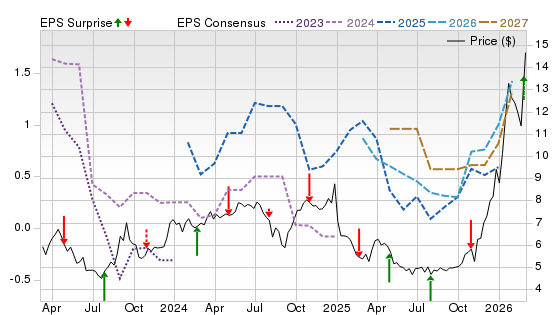
Nexa Resources is a zinc-focused miner with by-product exposure, giving profits meaningful torque when metals pricing and operating execution line up. The company exited 2025 with a clear turnaround versus 2024’s loss, reflecting stronger operating income and a firmer zinc/by-product pricing backdrop. It has also been sharpening its asset mix and cost discipline, which can raise cash-flow resilience even when prices cool.
Potential Risks
Zinc prices, treatment charges, FX, and Peru/Brazil operating conditions can quickly compress margins. Nexa has also faced community-related disruptions at key Peruvian assets, highlighting execution and social-license risk.
Forecast
Zacks Rank #1 (Strong Buy) signals rising estimates. The Style Scores of A for Value and Growth support the thesis, while F for Momentum warns of choppy trading. The chart shows a late-2025 breakout, 2026–2027 consensus lines turning higher after a mid-cycle dip, and a mixed surprise pattern, which is consistent with improving direction.
This is our short term rating system that serves as a timeliness indicator for stocks over the next 1 to 3 months. How good is it? See rankings and related performance below.
The Zacks Industry Rank assigns a rating to each of the 265 X (Expanded) Industries based on their average Zacks Rank.
An industry with a larger percentage of Zacks Rank #1's and #2's will have a better average Zacks Rank than one with a larger percentage of Zacks Rank #4's and #5's.
The industry with the best average Zacks Rank would be considered the top industry (1 out of 265), which would place it in the top 1% of Zacks Ranked Industries. The industry with the worst average Zacks Rank (265 out of 265) would place in the bottom 1%.
The Zacks Sector Rank assigns a rating to each of the 16 Sectors based on their average Zacks Rank.
A sector with a larger percentage of Zacks Rank #1's and #2's will have a better average Zacks Rank than one with a larger percentage of Zacks Rank #4's and #5's.
The sector with the best average Zacks Rank would be considered the top sector (1 out of 16), which would place it in the top 1% of Zacks Ranked Sectors. The sector with the worst average Zacks Rank (16 out of 16) would place in the bottom 1%.
The Style Scores are a complementary set of indicators to use alongside the Zacks Rank. It allows the user to better focus on the stocks that are the best fit for his or her personal trading style.
The scores are based on the trading styles of Value, Growth, and Momentum. There's also a VGM Score ('V' for Value, 'G' for Growth and 'M' for Momentum), which combines the weighted average of the individual style scores into one score.
Value ScoreA
Growth ScoreA
Momentum ScoreA
VGM ScoreA
Within each Score, stocks are graded into five groups: A, B, C, D and F. As you might remember from your school days, an A, is better than a B; a B is better than a C; a C is better than a D; and a D is better than an F.
As an investor, you want to buy stocks with the highest probability of success. That means you want to buy stocks with a Zacks Rank #1 or #2, Strong Buy or Buy, which also has a Score of an A or a B in your personal trading style.
Zacks Earnings ESP (Expected Surprise Prediction) looks to find companies that have recently seen positive earnings estimate revision activity. The idea is that more recent information is, generally speaking, more accurate and can be a better predictor of the future, which can give investors an advantage in earnings season.
The technique has proven to be very useful for finding positive surprises. In fact, when combining a Zacks Rank #3 or better and a positive Earnings ESP, stocks produced a positive surprise 70% of the time, while they also saw 28.3% annual returns on average, according to our 10 year backtest.
Micron is the leading U.S. memory maker, and AI-driven server demand is extending the cycle for high-value DRAM and HBM. In its latest quarter, Micron highlighted record revenue and gross margin, marking a sharp improvement from the prior year’s trough and signaling a tighter supply and better product mix. As AI workloads broaden, Micron’s earnings leverage can remain high.
Potential Risks
Memory is still cyclical: weaker end-demand or a quicker supply response can impact pricing. Big capex plans raise execution and cash-flow risk, and new “memory reduction” techniques can jolt sentiment even if near-term demand stays strong.
Forecast
Zacks Rank #1 reflects upward estimate revisions; A Growth and Momentum scores reinforce the uptrend despite a C Value score. The chart depicts a powerful price run into 2026, 2026–2027 consensus lines stair-stepping higher, and a mostly beat-leaning surprise pattern, supportive of further revisions, but consistent with sharp pullbacks after big gains.
This is our short term rating system that serves as a timeliness indicator for stocks over the next 1 to 3 months. How good is it? See rankings and related performance below.
The Zacks Industry Rank assigns a rating to each of the 265 X (Expanded) Industries based on their average Zacks Rank.
An industry with a larger percentage of Zacks Rank #1's and #2's will have a better average Zacks Rank than one with a larger percentage of Zacks Rank #4's and #5's.
The industry with the best average Zacks Rank would be considered the top industry (1 out of 265), which would place it in the top 1% of Zacks Ranked Industries. The industry with the worst average Zacks Rank (265 out of 265) would place in the bottom 1%.
The Zacks Sector Rank assigns a rating to each of the 16 Sectors based on their average Zacks Rank.
A sector with a larger percentage of Zacks Rank #1's and #2's will have a better average Zacks Rank than one with a larger percentage of Zacks Rank #4's and #5's.
The sector with the best average Zacks Rank would be considered the top sector (1 out of 16), which would place it in the top 1% of Zacks Ranked Sectors. The sector with the worst average Zacks Rank (16 out of 16) would place in the bottom 1%.
The Style Scores are a complementary set of indicators to use alongside the Zacks Rank. It allows the user to better focus on the stocks that are the best fit for his or her personal trading style.
The scores are based on the trading styles of Value, Growth, and Momentum. There's also a VGM Score ('V' for Value, 'G' for Growth and 'M' for Momentum), which combines the weighted average of the individual style scores into one score.
Value ScoreA
Growth ScoreA
Momentum ScoreA
VGM ScoreA
Within each Score, stocks are graded into five groups: A, B, C, D and F. As you might remember from your school days, an A, is better than a B; a B is better than a C; a C is better than a D; and a D is better than an F.
As an investor, you want to buy stocks with the highest probability of success. That means you want to buy stocks with a Zacks Rank #1 or #2, Strong Buy or Buy, which also has a Score of an A or a B in your personal trading style.
Zacks Earnings ESP (Expected Surprise Prediction) looks to find companies that have recently seen positive earnings estimate revision activity. The idea is that more recent information is, generally speaking, more accurate and can be a better predictor of the future, which can give investors an advantage in earnings season.
The technique has proven to be very useful for finding positive surprises. In fact, when combining a Zacks Rank #3 or better and a positive Earnings ESP, stocks produced a positive surprise 70% of the time, while they also saw 28.3% annual returns on average, according to our 10 year backtest.
Aura Minerals is a gold-and-copper producer with multiple operating mines, so growth can come from both metal prices and project execution. In its latest earnings release, Aura emphasized operational progress and positioned 2026 for higher production versus 2025, reinforcing the near-term growth narrative. The attraction is that a broader asset base can diversify single-mine risk while giving investors exposure to expansion milestones.
Potential Risks
Costs and sustaining capex can rise quickly in mining, and smaller producers face disruption and jurisdiction risk. After a rapid rerating, any project slippage, reserve revisions, or weaker gold prices could drive estimate resets.
Forecast
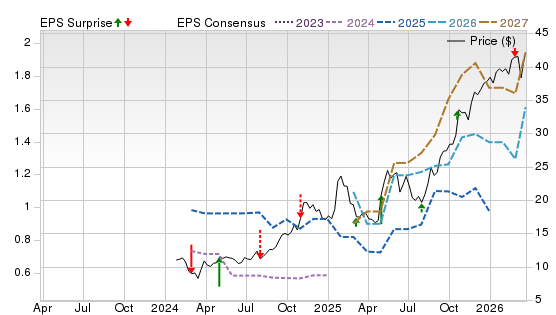
Zacks Rank #1 supports upward revisions; A Growth score offsets a C Value and D Momentum score that suggests fundamentals matter more than short-term technicals. The chart shows a run into 2026 followed by volatility, with 2026 consensus climbing while the latest surprise skews negative, suggesting the stock may need execution to justify its premium.
This is our short term rating system that serves as a timeliness indicator for stocks over the next 1 to 3 months. How good is it? See rankings and related performance below.
The Zacks Industry Rank assigns a rating to each of the 265 X (Expanded) Industries based on their average Zacks Rank.
An industry with a larger percentage of Zacks Rank #1's and #2's will have a better average Zacks Rank than one with a larger percentage of Zacks Rank #4's and #5's.
The industry with the best average Zacks Rank would be considered the top industry (1 out of 265), which would place it in the top 1% of Zacks Ranked Industries. The industry with the worst average Zacks Rank (265 out of 265) would place in the bottom 1%.
The Zacks Sector Rank assigns a rating to each of the 16 Sectors based on their average Zacks Rank.
A sector with a larger percentage of Zacks Rank #1's and #2's will have a better average Zacks Rank than one with a larger percentage of Zacks Rank #4's and #5's.
The sector with the best average Zacks Rank would be considered the top sector (1 out of 16), which would place it in the top 1% of Zacks Ranked Sectors. The sector with the worst average Zacks Rank (16 out of 16) would place in the bottom 1%.
The Style Scores are a complementary set of indicators to use alongside the Zacks Rank. It allows the user to better focus on the stocks that are the best fit for his or her personal trading style.
The scores are based on the trading styles of Value, Growth, and Momentum. There's also a VGM Score ('V' for Value, 'G' for Growth and 'M' for Momentum), which combines the weighted average of the individual style scores into one score.
Value ScoreA
Growth ScoreA
Momentum ScoreA
VGM ScoreA
Within each Score, stocks are graded into five groups: A, B, C, D and F. As you might remember from your school days, an A, is better than a B; a B is better than a C; a C is better than a D; and a D is better than an F.
As an investor, you want to buy stocks with the highest probability of success. That means you want to buy stocks with a Zacks Rank #1 or #2, Strong Buy or Buy, which also has a Score of an A or a B in your personal trading style.
Zacks Earnings ESP (Expected Surprise Prediction) looks to find companies that have recently seen positive earnings estimate revision activity. The idea is that more recent information is, generally speaking, more accurate and can be a better predictor of the future, which can give investors an advantage in earnings season.
The technique has proven to be very useful for finding positive surprises. In fact, when combining a Zacks Rank #3 or better and a positive Earnings ESP, stocks produced a positive surprise 70% of the time, while they also saw 28.3% annual returns on average, according to our 10 year backtest.
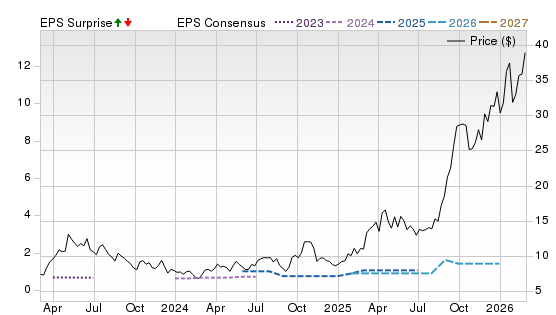
DRDGOLD is a South African retreatment miner that converts old tailings into gold, pairing a cash-yield story with low-risk, incremental growth. In its latest reported results, the company highlighted materially higher cash generation and ongoing reinvestment to extend mine life versus the prior-year period. With gold prices supportive, that operating model can compound free cash flow.
Potential Risks
Operations are exposed to South African power reliability, labor/regulatory shifts, and the rand gold price. Lower grades, throughput issues, or capex overruns could pressure margins and force estimate resets.
Forecast
Zacks Rank #1 signals favorable estimate revisions; C Value, A Growth, and B Momentum scores suggest improving fundamentals with trend support. The chart shows a strong 2025–early 2026 run followed by volatility, with 2026–2027 consensus lines jumping higher, implying sustained upside likely requires consistent delivery against reinvestment plans.
This is our short term rating system that serves as a timeliness indicator for stocks over the next 1 to 3 months. How good is it? See rankings and related performance below.
The Zacks Industry Rank assigns a rating to each of the 265 X (Expanded) Industries based on their average Zacks Rank.
An industry with a larger percentage of Zacks Rank #1's and #2's will have a better average Zacks Rank than one with a larger percentage of Zacks Rank #4's and #5's.
The industry with the best average Zacks Rank would be considered the top industry (1 out of 265), which would place it in the top 1% of Zacks Ranked Industries. The industry with the worst average Zacks Rank (265 out of 265) would place in the bottom 1%.
The Zacks Sector Rank assigns a rating to each of the 16 Sectors based on their average Zacks Rank.
A sector with a larger percentage of Zacks Rank #1's and #2's will have a better average Zacks Rank than one with a larger percentage of Zacks Rank #4's and #5's.
The sector with the best average Zacks Rank would be considered the top sector (1 out of 16), which would place it in the top 1% of Zacks Ranked Sectors. The sector with the worst average Zacks Rank (16 out of 16) would place in the bottom 1%.
The Style Scores are a complementary set of indicators to use alongside the Zacks Rank. It allows the user to better focus on the stocks that are the best fit for his or her personal trading style.
The scores are based on the trading styles of Value, Growth, and Momentum. There's also a VGM Score ('V' for Value, 'G' for Growth and 'M' for Momentum), which combines the weighted average of the individual style scores into one score.
Value ScoreA
Growth ScoreA
Momentum ScoreA
VGM ScoreA
Within each Score, stocks are graded into five groups: A, B, C, D and F. As you might remember from your school days, an A, is better than a B; a B is better than a C; a C is better than a D; and a D is better than an F.
As an investor, you want to buy stocks with the highest probability of success. That means you want to buy stocks with a Zacks Rank #1 or #2, Strong Buy or Buy, which also has a Score of an A or a B in your personal trading style.
Zacks Earnings ESP (Expected Surprise Prediction) looks to find companies that have recently seen positive earnings estimate revision activity. The idea is that more recent information is, generally speaking, more accurate and can be a better predictor of the future, which can give investors an advantage in earnings season.
The technique has proven to be very useful for finding positive surprises. In fact, when combining a Zacks Rank #3 or better and a positive Earnings ESP, stocks produced a positive surprise 70% of the time, while they also saw 28.3% annual returns on average, according to our 10 year backtest.
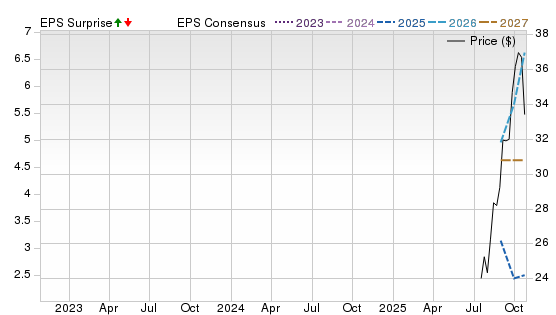
BrightSpring provides home- and community-based services plus specialty pharmacy, a mix that can grow as payers shift complex care to lower-cost settings. In its latest reported quarter, BrightSpring reported year-over-year gains in revenue and adjusted EBITDA and issued 2026 guidance for continued growth, signaling improving scale and operating leverage versus earlier periods. The business also benefits from demographic demand and referral-driven volumes.
Potential Risks
Reimbursement pressure, labor availability, compliance, and integration execution can squeeze margins in services-heavy models. Leverage and working-capital needs can matter if growth slows or payers tighten authorizations.
Forecast
Zacks Rank #1 indicates positive estimate revisions; B Value with A Growth and C Momentum score implies a fundamentally driven story with moderate trend support. The chart shows a steady climb through 2025–2026, 2026–2027 consensus lines trending higher, and a mixed but beat-leaning surprise pattern, consistent with estimates drifting up, provided management keeps converting guidance into repeatable quarterly delivery.
The Zacks Rank is a proprietary stock-rating model that uses trends in earnings estimate revisions and earnings-per-share (EPS) surprises to classify stocks into five groups: #1 (Strong Buy), #2 (Buy), #3 (Hold), #4 (Sell) and #5 (Strong Sell). The Zacks Rank is calculated through four primary factors related to earnings estimates: analysts' consensus on earnings estimate revisions, the magnitude of revision change, the upside potential and estimate surprise (or the degree in which earnings per share deviated from the previous quarter).
Zacks builds the data from 3,000 analysts at over 150 different brokerage firms. The average yearly gain for Zacks Rank #1 (Strong Buy) stocks is +23.62% per year from January, 1988, through June 2, 2025.
Selections for Best Growth Stocks are based on the current top ranking stocks based on Zacks Indicator Score, Style Scores and fundamentals. For this list, only companies that have average daily trading volumes of 100,000 shares or more were considered, as well as companies from the top 50% of all industries. All information is current as of market open March 31, 2026.
General Questions About Growth Stocks
What is a growth stock?
A growth stock represents a company expected to grow sales, earnings, or cash flow faster than the broader market. These firms often operate in expanding industries and reinvest heavily in research, marketing, and infrastructure to sustain momentum.
What are the benefits of buying growth stocks?
Growth stocks offer the potential for significant price appreciation, exposure to innovative business models, and long-term compounding. When successful, they can outperform more mature companies by a wide margin.
What are the risks of buying growth stocks?
Higher valuations, sensitivity to interest rates, and reliance on future earnings projections increase downside risk. If growth slows or expectations fall, share prices can decline sharply.
Growth vs. value stocks: What’s better right now?
Growth stocks tend to excel during periods of economic expansion and technological change, while value stocks often perform better when investors prioritize stability and income. Market leadership can rotate, making diversification across styles important.
Are growth stocks a good investment during economic uncertainty?
During uncertain periods, growth stocks may experience heightened volatility. Companies with strong balance sheets, recurring revenue, and durable demand tend to hold up better than speculative names.
How do growth stocks differ from dividend stocks?
Dividend stocks focus on returning cash to shareholders, while growth stocks reinvest profits to fuel expansion. Investors often choose growth for appreciation and dividends for income.
Are growth stocks suitable for beginners?
They can be, especially through diversified funds or established large-cap names. Beginners should avoid concentrating too heavily in speculative or unprofitable companies.
How do growth stocks perform during recessions?
Performance varies. Some growth companies with essential products continue to expand, while others tied to discretionary spending may struggle.
Look for consistent revenue growth, expanding addressable markets, competitive advantages, and strong management execution.
What metrics should I look at in growth stocks?
Common metrics include revenue growth rates, earnings growth, free cash flow trends, return on invested capital, and valuation ratios relative to growth expectations.
What ETFs contain the best growth stocks?
Growth-focused ETFs often track large-cap or sector-specific indexes, offering exposure to leading growth companies while reducing single-stock risk.
Should I diversify my growth stock portfolio?
Yes. Diversifying across sectors, company sizes, and geographies can help manage volatility and reduce reliance on any single trend.
Are growth stocks a good investment during economic uncertainty?
Quality growth stocks with pricing power and resilient demand can still perform well, but position sizing and diversification are critical.
What sectors typically produce strong growth stocks?
Certain sectors consistently produce growth leaders due to innovation, scale advantages, or long-term demand trends. Examples include:
Technology and AI: Companies benefiting from cloud computing, artificial intelligence, and software platforms, such as NVIDIA, Microsoft, Alphabet, and Amazon.
Consumer Discretionary: Brands and platforms capturing shifts in consumer behavior and digital commerce, including Tesla, Amazon, and Booking Holdings.
Healthcare and Biotechnology: Firms developing breakthrough drugs, medical devices, or diagnostics, such as Eli Lilly, Novo Nordisk, Vertex Pharmaceuticals, and Intuitive Surgical.
Communication Services: Digital advertising, streaming, and social platforms with scalable user bases, including Meta Platforms and Netflix.
Financial Technology: Companies modernizing payments, trading, and financial infrastructure, such as Visa, Mastercard, and Block.
Clean Energy and Electrification: Businesses tied to renewable power, battery technology, and grid modernization, including NextEra Energy, Enphase Energy, and Tesla.
These sectors frequently generate high-growth opportunities, though leadership within them can change over time.
Do growth stocks work for long-term or short-term strategies?
They are generally better suited for long-term investing, allowing time for innovation and expansion to translate into earnings growth.
What are common mistakes to avoid when investing in growth stocks?
Chasing hype, ignoring valuation, overconcentration, and selling too quickly during volatility are frequent pitfalls.
How to Purchase Growth Stocks
Do I need a broker to buy growth stocks?
Yes. Most investors use online brokerage platforms that offer access to individual stocks, ETFs, and research tools.
How much should I invest in my first growth stock purchase?
Start with an amount that fits your overall financial plan and risk tolerance. Many investors begin with smaller positions and add over time.
Strategies for Buying Growth Stocks
How often should I rebalance a growth-focused portfolio?
Rebalancing annually or semiannually helps maintain target allocations and manage risk.
When should I sell a growth stock?
Consider selling if the company’s fundamentals deteriorate, growth prospects fade, or the position becomes too large relative to your portfolio.
How do I track performance and assess whether a growth stock is still strong?
Monitor earnings reports, revenue trends, competitive positioning, and management guidance.
What tax implications come with selling growth stocks?
Selling at a profit may trigger capital gains taxes, with rates depending on holding period and income level.
Growth Stock Alternatives
Are index funds a safer alternative to picking growth stocks?
Index funds provide broad exposure and lower risk than individual stock selection, making them appealing for many investors.
What are conservative investment options if growth stocks are too risky?
Options include value stocks, dividend-paying equities, bonds, and balanced funds that emphasize capital preservation.




 View the Zacks #1 Rank List


 Hold
Hold 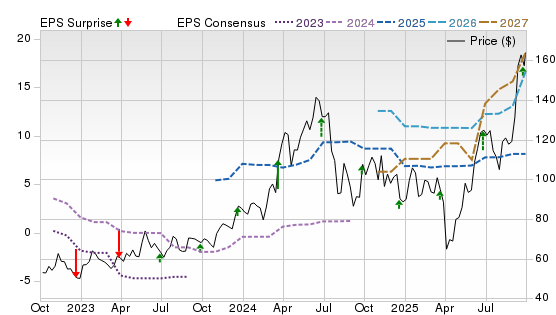
 Strong Buy